Harvard’s AI tutoring study caught my attention because it raises a question every sales leader should be asking: are we organizing learning around the material, or around the person who needs to use it?
The June 2025 physics study compared a purpose-built AI tutor with active classroom learning across two lessons. The authors reported more than twice the median learning gain with the tutor. That was an immediate physics-learning result. It does not establish sales performance or results for Practis.
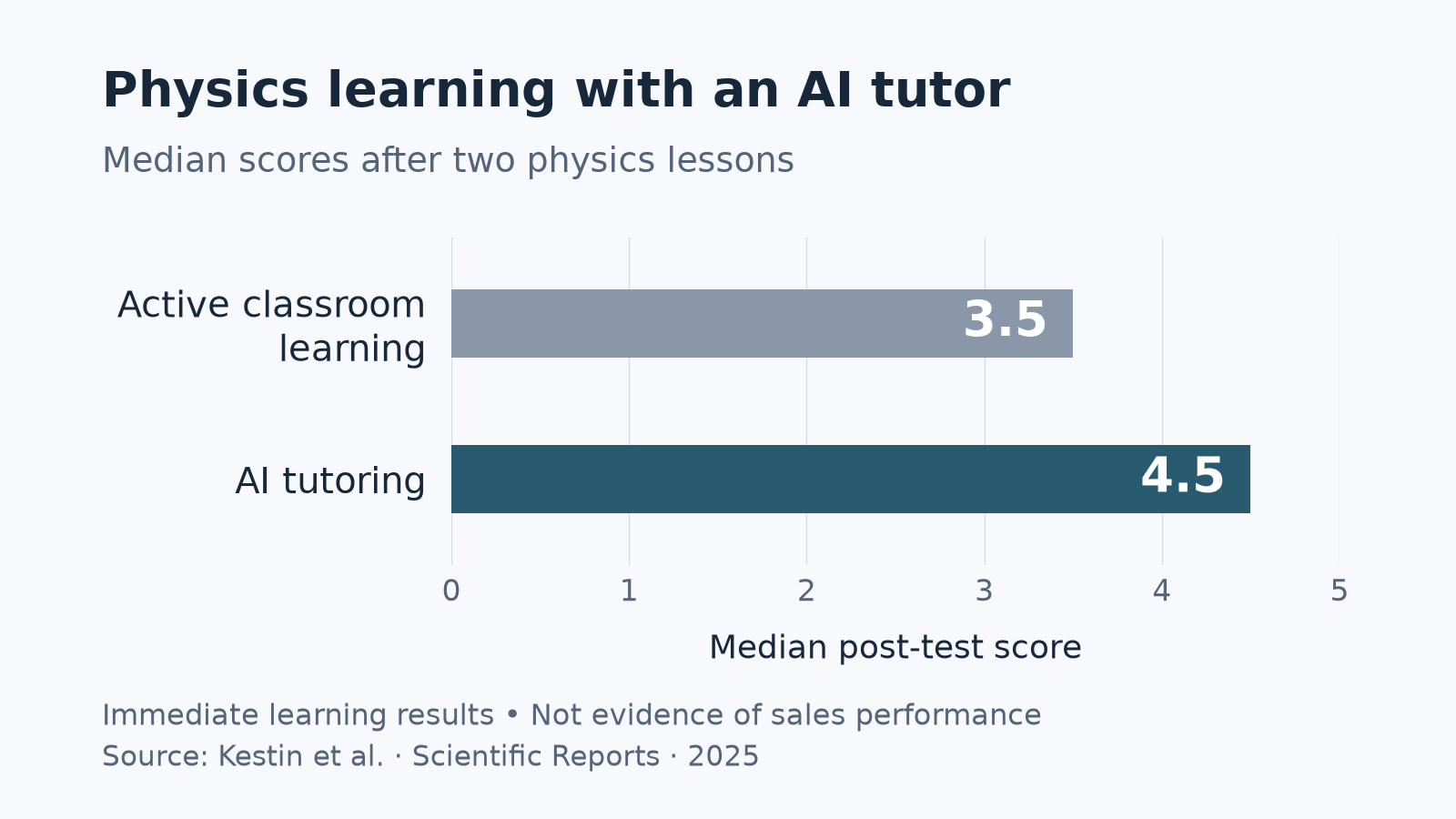
Still, it gives us a reason to examine how we teach people to sell.
A salesperson eventually has to stand in front of a customer and have a useful conversation. They have to listen, ask a good question, explain something clearly, and exercise judgment when the answer goes somewhere they didn’t expect.
That is the point where learning has to show up.
Start with the question the rep is trying to answer
A training program needs structure. Managers need a shared standard. New hires need a place to begin.
But two people can finish the same lesson with very different questions. One may understand the product and struggle to explain why it matters. Another may know the explanation and hesitate when a customer challenges it.
Give those people the same next assignment and you may miss what each needs to work through.
I think the opportunity with AI coaching is to make room for that conversation. Let the person ask the question. Let them explain what they think. Find the point where the explanation gets thin, or where the question reveals something they haven’t understood yet.
Then help them work through it.
That is a different starting point from handing someone more content and hoping the relevant part sticks. It asks the learner to participate, put their thinking into words, and discover what they still need to learn.
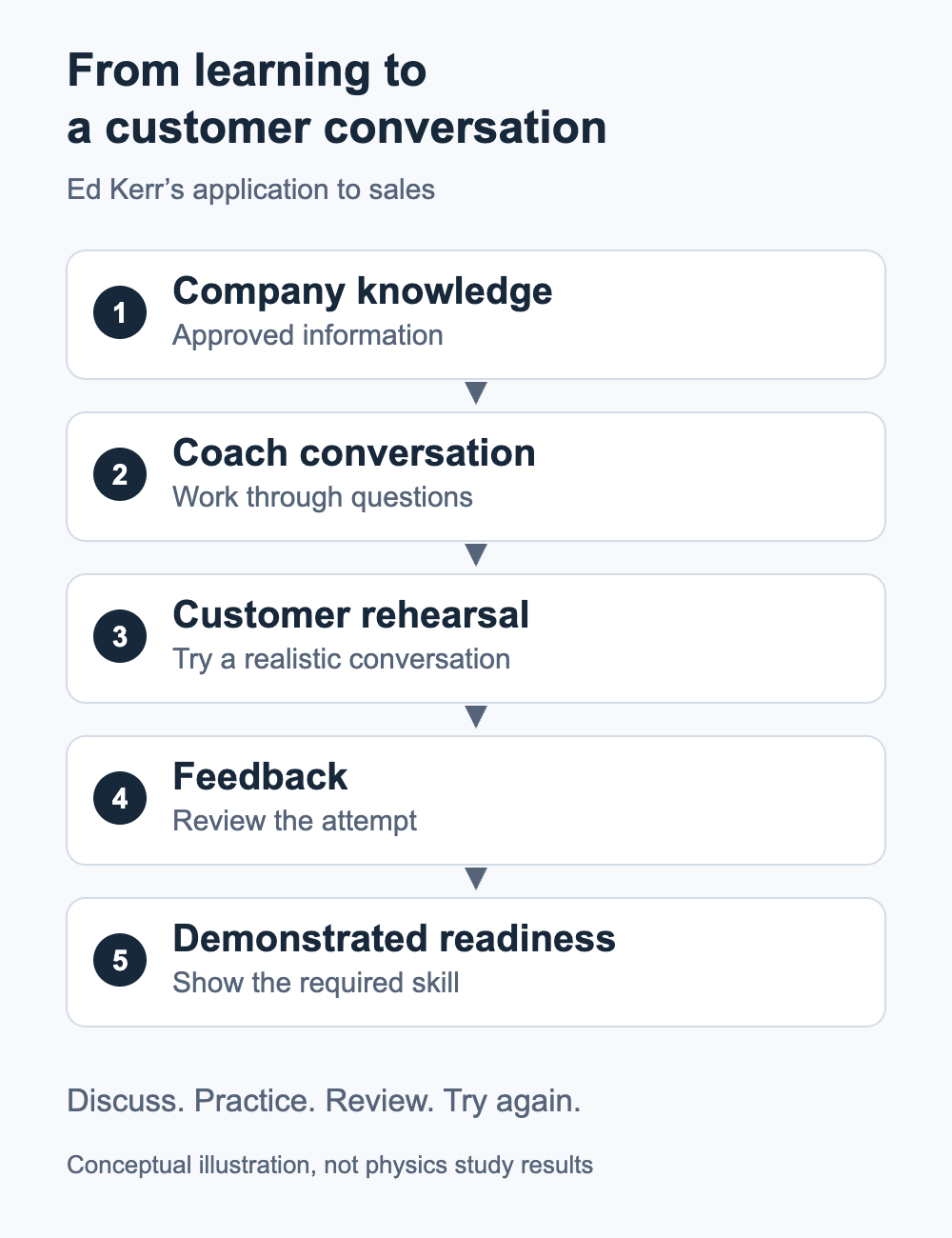
Make your company’s knowledge usable
Think about what an experienced salesperson brings to a conversation.
They know how the company works. They know why a recommendation is made. They have heard the questions customers ask. They know which customer story explains a point and which story will send the conversation in the wrong direction.
Some of that knowledge is documented. Some is scattered across recordings, presentations, and manuals. Some lives in the heads of a few people everyone calls when they get stuck.
The question is how to make the relevant knowledge available to the next person who needs it.
Collecting everything is only a start. Someone still has to decide what is accurate, current, approved, and useful for the situation. A confident explanation based on an old policy creates another problem.
I want a rep to be able to discuss a selling question using the company’s approved approach. Ask a follow-up. Work through why the approach makes sense. Explain it back in their own words.
That conversation should bring the company’s expertise closer to the customer conversation the rep is preparing for.
Take the learning into practice
Here is a hypothetical example. A homeowner tells an HVAC salesperson that another company has quoted a lower price.
The rep might know the equipment, the warranty, and the installation process. They might still be unsure how to respond without immediately offering a discount.
Before practicing, there are useful questions to work through. What is the homeowner comparing? What differences can the rep substantiate? What should they ask before explaining those differences? When would the lower-priced offer actually be appropriate?
A coaching conversation can help the rep reason through those questions using approved company information. The next step is to rehearse with an AI Customer: a simulated buyer modeled on that customer profile, situation, and concerns.
Now the homeowner pushes back. The rep has to listen and respond. They can’t rely on having recognized the right answer on a screen.
The practice might reveal that they explained the warranty before understanding the competing offer. That gives them something specific to review and try again.
Discuss the situation. Practice the conversation. Examine what happened. Take another attempt.
For me, that connection is where AI coaching becomes interesting. The conversation with the Coach helps the person work through the question. Rehearsal asks them to put the learning to use.
Keep people in the process
The expertise behind this experience still comes from people. Managers set expectations. Experienced reps contribute what they have learned. Someone who knows the customer checks whether the scenario is realistic and the guidance is sound.
Human mentors also bring context that a practice exercise may miss. They can challenge a decision, notice a pattern, and help someone think through a situation that deserves a longer conversation.
I see AI as a way to make more of that expertise available between those conversations. A rep can arrive with a sharper question, an attempt to review, and a clearer idea of where they need help.
That gives the manager something concrete to coach.
Today
Practis helps teams rehearse defined customer conversations with AI roleplay built around company content, customer profiles, and sales objectives. Recordings and feedback give reps a way to review their practice and prepare another attempt, within the scope of their program.
The Practis Coach
The Practis Coach helps reps talk through selling questions using relevant company and learner context, then move into AI Customer rehearsal. They can ask a follow-up, explain their thinking, and work through the conversation they need to handle.
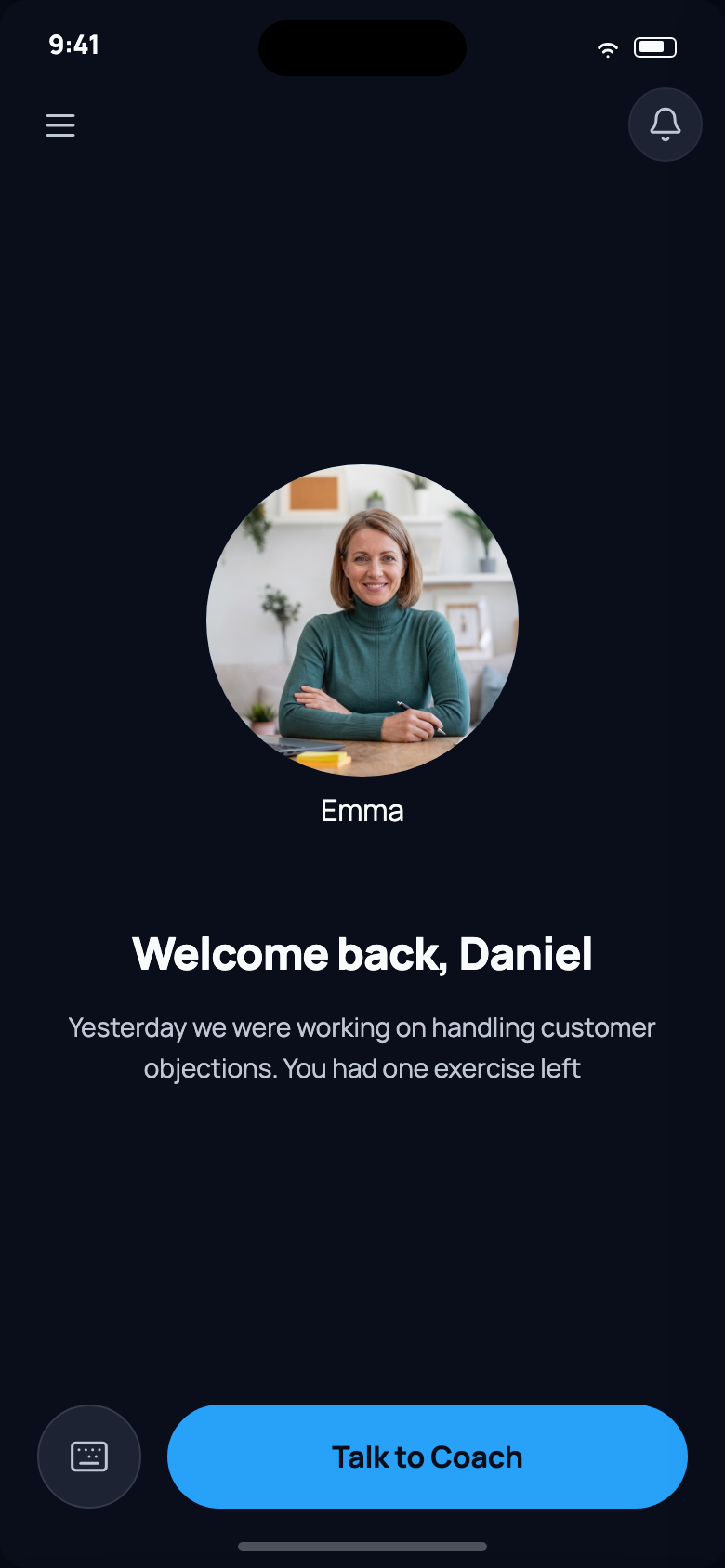
The purpose remains human: help the salesperson listen, judge, and communicate more effectively.
Book a demo
If you want to start somewhere, choose one conversation your team needs to handle. Define what good performance looks like. Give a rep the relevant knowledge, a chance to discuss it, and a realistic practice attempt.
Then look at what they actually did. Did they uncover the reason for hesitation? Explain the relevant difference? Agree on an appropriate next step?
That is evidence against a defined standard. You can use it to focus the next coaching conversation.
Your next customer shouldn’t be your rep’s first realistic practice. Before that appointment, ask them to demonstrate the conversation you expect them to handle.